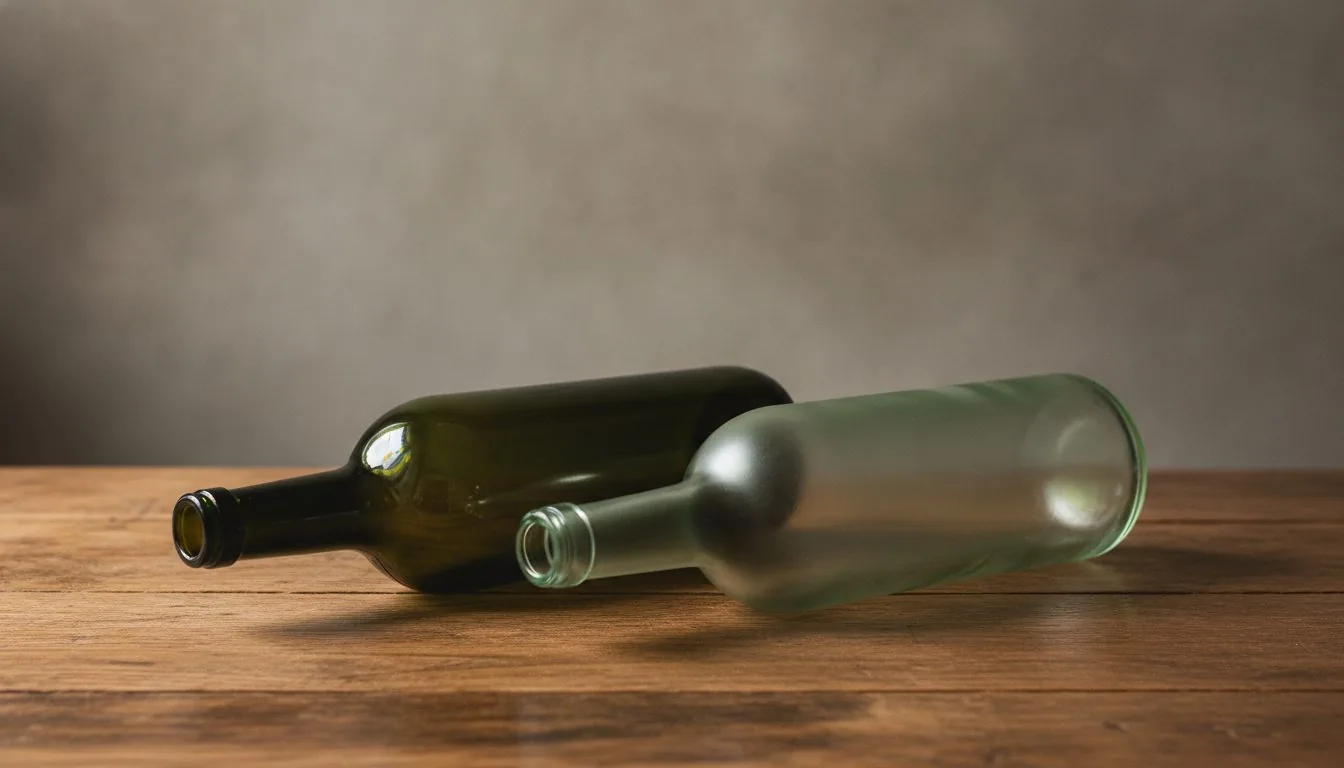
Quick Answer: Store red and white wine the same way: in the dark, away from vibration and strong smells, on its side if it has a cork, and at a steady temperature near 55°F (13°C). The Paso Robles Wine Country Alliance gives 45 to 65°F as a safe long-term range with 60 to 80 percent humidity. Kendall-Jackson gives 50 to 70 percent humidity. Steady matters more than exact, and red and white differ only when you serve them.
This guide is about sealed bottles you are keeping for later. It gives the figures two wine sources publish, shows where they differ, and answers the red versus white question. For how long a sealed bottle lasts, read how long unopened wine lasts. Once a bottle is open, the steps change, and how to preserve wine after opening covers them.
What temperature should you store red and white wine at?
Near 55°F (13°C), and keep it steady. The Paso Robles Wine Country Alliance, a regional wine trade body (article dated 9 July 2026, read October 2026), reports the practices of a retired winery sommelier. It gives 55°F as the ideal and 45 to 65°F (7 to 18°C) as a safe long-term range, as long as the temperature does not swing from day to day. Kendall-Jackson, a winery (blog post from 2010, read October 2026), says most long-term cellars are kept at 55°F. It also calls "room temperature" a myth, because the phrase dates from drafty rooms between 55 and 65°F.
| Factor | Paso Robles Wine Country Alliance | Kendall-Jackson |
|---|---|---|
| Ideal temperature | 55°F (about 13°C) | 55°F, the usual cellar temperature |
| Temperature swings | Daily changes of 5 to 8°F or more can damage a bottle | Aim for swings of less than 10°F |
| Humidity | 60 to 80 percent | 50 to 70 percent |
| Kitchen fridge | About 38°F, too cold long term, fine for a bottle you will open in a day or two | About 40°F, a solution only in limited circumstances |
The two sources disagree on humidity and on how big a swing is safe. Neither is a standard, so take the overlap: steady, cool, and not dry. Both say a dry space can dry out the cork, and the Alliance adds that very damp air can grow mold on labels.
Do red and white wine need different storage?
No. The Alliance says both store best at the same steady temperature, with the same humidity, dark and on their side, and that the difference between red and white comes at serving time. Kendall-Jackson agrees there is not much difference in what the two need. It adds that aromatic whites and lighter, aromatic reds suffer sooner in poor conditions, and that lower-alcohol wines of every color are more sensitive to temperature swings.
So a single cool, quiet spot works for both. This post gives no serving temperatures, because neither source supplied them.
What else matters besides temperature?
Light, vibration, smells and the bottle's position. The Alliance says to keep wine in the dark, because light causes off-flavors and white wine and rosé are more sensitive than reds, and to keep it away from washing machines and other sources of constant movement. It also says corks are slightly porous, so cleaning products and mold nearby can affect aroma over months or years. Kendall-Jackson makes the same points about light and movement.
Position depends on the closure. Both sources say to lay a corked bottle on its side so the wine keeps the cork moist. Kendall-Jackson adds that a screw cap, a glass stopper or another non-cork closure can sit up, down or sideways.
Can you keep wine in the kitchen fridge?
For a few days or weeks, yes, but not for the long term. The Alliance says a food fridge is fine for a bottle you will open within a day or two. Kendall-Jackson says there is little harm in keeping a case of inexpensive, easy-drinking white or rosé there if you plan to drink it over a summer. For long storage, it warns that a natural cork may contract, the wine may stop evolving, and harmless tartrate crystals may form. A freezer is much worse, since the University of Illinois Physics Van puts the freezing point of a typical wine at about 22°F, as covered in does wine freeze.
Do you need a wine cellar or wine fridge?
Not necessarily. The Alliance says a closet, a pantry or a basement corner works if it stays cool, dark and free of vibration. Kendall-Jackson's view is that if you hold bottles you plan to sip later, a cellar or wine fridge is likely worth it, but if most bottles are drunk within a few weeks of buying, it suggests not bothering. A small hygrometer, which the Alliance recommends, shows whether a closet stays in range.
Does Esatto sell anything for storing wine?
No. Esatto makes and sells the plastic pourers in the Pour and Seal collection. They are our own products, not an independent pick, and their pages are written for liquor bottles. Esatto does not sell wine racks, wine fridges, stoppers or other wine storage.
Frequently asked questions
How do you store red wine?
On its side if it has a cork, in the dark, away from vibration and strong smells, at a steady temperature near 55°F. The Alliance says humidity of 60 to 80 percent protects the cork. Kendall-Jackson gives 50 to 70 percent.
How do you store white wine?
The same way as red. The Paso Robles Wine Country Alliance says both store at the same temperature, humidity and position. The Alliance also notes that white wine and rosé are more sensitive to light, so darkness matters even more.
What temperature should you store red wine at?
About 55°F (13°C). The Alliance gives 45 to 65°F as a safe long-term range if it holds steady, and says daily swings of 5 to 8°F or more can damage a bottle. Kendall-Jackson also names 55°F.
What temperature should you store white wine at?
The same, about 55°F. Both sources say red and white are stored alike. The difference is at the table, where the Alliance says serving temperature is where they differ. This post does not give serving temperatures.
Should wine be stored on its side?
If the bottle has a natural cork, yes, so the wine keeps the cork moist. Kendall-Jackson says a screw cap, glass stopper or other non-cork closure can be stored in any position.
Can you store wine in the fridge long term?
Not ideally. The Alliance says a standard fridge is too cold for long-term storage, though fine for a bottle you will open in a day or two. Kendall-Jackson lists cork shrinkage and stalled aging as risks over a long stay.