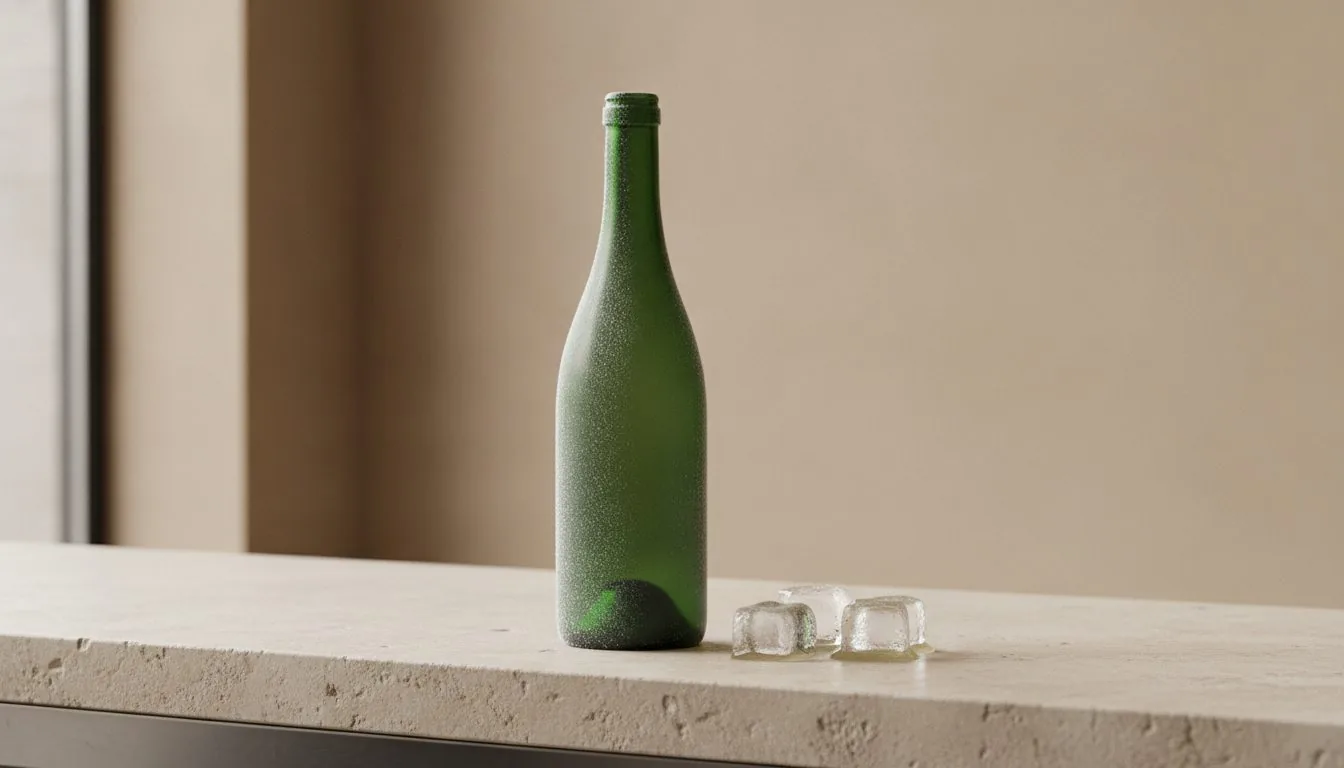
Quick Answer: Yes. A typical 12.5 percent wine starts to freeze at about 22°F (-6°C), according to the University of Illinois Physics Van and Hope Family Wines. It goes to slush first, and more of it freezes as the temperature drops. Ice takes up more room than liquid, so a frozen bottle can push its cork out or crack. Wine frozen in a bag or an ice cube tray for cooking is fine.
Wine freezes at a temperature that a home freezer, a cold car or an unheated porch can reach. This guide covers the freezing point, what happens to the bottle, whether thawed wine is still worth drinking, and how to freeze leftovers on purpose. For an opened bottle on the counter or in the fridge, read how long wine lasts after opening. For a sealed bottle, see how long unopened wine lasts.
At what temperature does wine freeze?
About 22°F (-6°C) for a wine at 12.5 percent alcohol. The University of Illinois Physics Van (answers published 2007, read October 2026) says alcohol alone lowers the freezing point from 0°C to about -6°C, and that sugars and other dissolved solids lower it a little more. It gives about -6°C or 22°F for a typical red. Hope Family Wines (read October 2026) gives the same 22°F and says it is within reach of a residential freezer.
Strength moves the number. The Physics Van page prints a table of freezing points for alcohol and water mixtures.
| Alcohol by volume | Freezing point | Source |
|---|---|---|
| 10 percent | 25°F (-4°C) | Physics Van |
| 12.5 percent (typical wine) | About 22°F (-6°C) | Physics Van; Hope Family Wines |
| 20 percent | 15°F (-9°C) | Physics Van |
| 40 percent (typical spirits) | -10°F (-23°C) | Physics Van |
The table is for plain alcohol and water, so a wine with sugar freezes slightly lower. Neither page gives a separate figure for white and red. A 40 percent spirit needs far colder air than a home freezer, which is the point Hope Family Wines makes about vodka.
What happens to a bottle of wine in the freezer?
It turns to slush, and the expanding ice can push the cork out or crack the glass. The Physics Van answer explains that the first ice is almost pure water, which leaves the remaining wine stronger and harder to freeze. So wine does not set solid at the first freezing point. The amount frozen grows as it gets colder. Ice takes up more volume, which can slide the cork out and weaken the seal, and in a worse case ice can plug the neck and crack the bottle.
Readers on that page describe losing three bottles of red wine in a cold car when the corks were pushed out, and a bottle forgotten in a freezer overnight that was solid. Those are readers' accounts, not measurements. The page also notes a car takes a while to cool down, so a short cold spell is less of a risk than a long one.
Is wine still good after it has frozen?
Often, if the bottle stayed whole and sealed. Hope Family Wines says freezing an unopened bottle does not change the flavor much when the bottle does not break and the cork does not pop out, because air is the biggest threat to taste. The winery still does not recommend freezing wine to drink later, and says the flavor may differ from what the winemaker intended. Kendall-Jackson's preservation page (checked October 2026) is more open to it for easy-going, fruit-driven wines kept frozen a few weeks or less, and warns that complex wines lose more.
If the cork has moved, treat the bottle as open. The Physics Van page says the seal can be degraded. Check the color, smell it and take one small sip, the test Kendall-Jackson describes for opened wine (checked October 2026): reds turning brick or brown, whites turning darker yellow or gold, or a vinegar smell. If it smells wrong, do not drink it. The opened red wine guide covers the time ranges.
Can you freeze leftover wine for cooking?
Yes, and it is the one use Hope Family Wines recommends. Pour leftover wine into freezer bags or an ice cube tray, not back into the glass bottle, because the bottle can break as the wine expands. The winery says each cube comes out at about an ounce, which makes it easy to drop into a pan. It suggests an old, partly finished red for this.
Is it safe to chill a bottle in the freezer?
It is a risk, and the risk is forgetting it. No source used for this post gives a safe number of minutes for chilling a bottle in a freezer, or the hours it takes to freeze solid, so this post gives none. Hope Family Wines advises against leaving a bottle in the freezer for long periods, because it may break and the flavor may change. If you use the freezer, set a timer the moment the bottle goes in. That advice is ours, not a sourced figure.
Does Esatto sell anything for wine in the freezer?
No. Esatto makes and sells the plastic pourers in the Pour and Seal collection. They are our own products, not an independent pick, and their pages are written for liquor bottles. Esatto does not sell wine stoppers, wine storage or chilling products.
Frequently asked questions
Can wine freeze?
Yes. Hope Family Wines says a bottle can freeze if it sits at very cold temperatures for long enough. The University of Illinois Physics Van puts the starting point at about 22°F (-6°C) for a typical red. Strong spirits need much colder air.
Will wine freeze in the freezer?
It can. Hope Family Wines says 22°F is within the reach of a residential freezer, and a reader on the Physics Van page reports a bottle solid after a night in one. Expect slush first, then more ice as it gets colder.
What temperature does wine freeze?
About 22°F (-6°C) for a wine at 12.5 percent alcohol, according to the University of Illinois Physics Van and Hope Family Wines. Sugars lower the figure slightly, and a wine with less alcohol starts to freeze at a slightly higher temperature.
Does white wine freeze?
Yes, and so does red. Neither source gives a separate figure by color, because alcohol and sugar decide the freezing point. The Physics Van answer gives about 22°F for a typical red.
Will wine freeze outside?
It can, if the air stays below roughly 22°F long enough for the bottle to cool through. The Physics Van page describes wine freezing in a cold car, and notes that a car takes time to cool. A short cold spell is less of a risk than a long one.