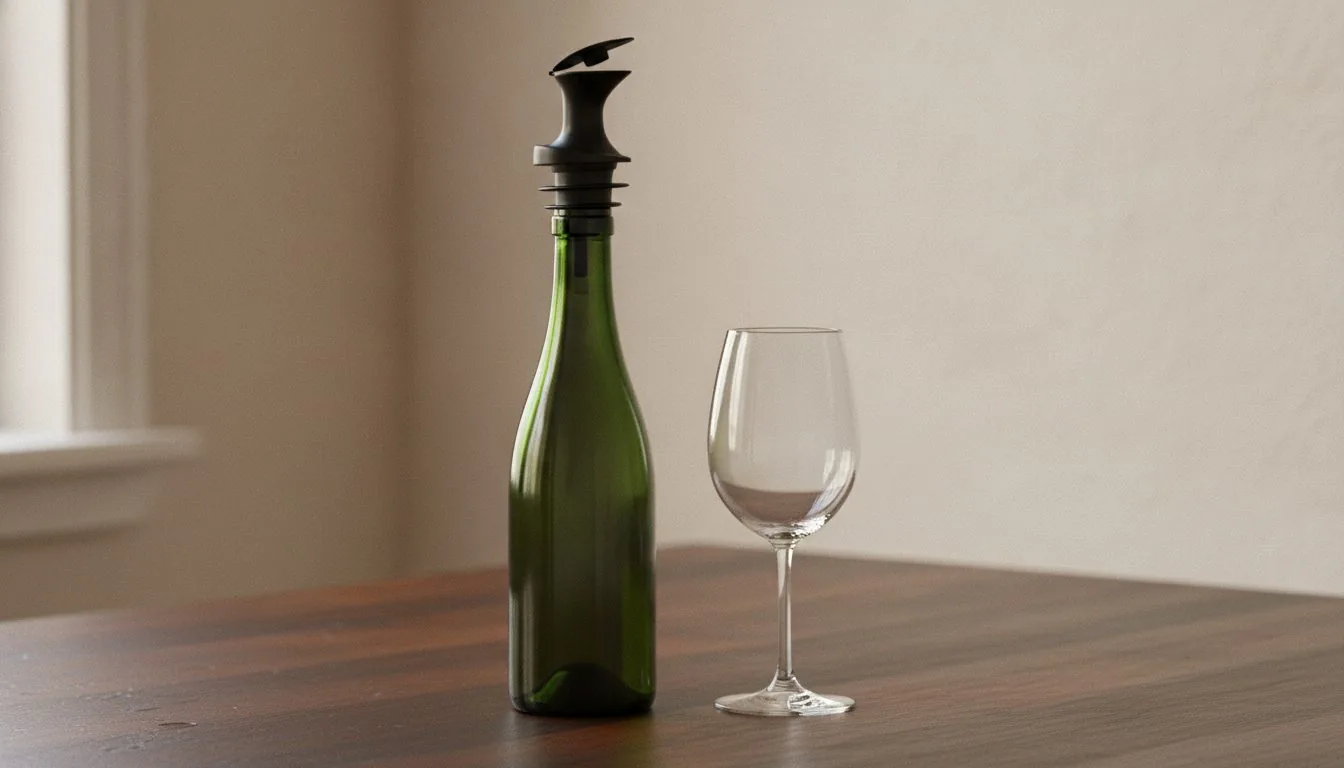
Quick Answer: Close the bottle straight after pouring, then put it in the fridge, reds included. Kendall-Jackson says the cold slows oxidation, and that a bottle stood upright has less wine touching air than one laid flat. Moving leftovers into a smaller bottle filled to the top helps too. A pump or gas spray can add to those steps, but the first three cost nothing.
Opened wine fades because of air, so preserving it means cutting how much air reaches it and slowing what the air does. This guide lists the steps as the wineries give them, covers opened red wine on its own, and shows where pumps, stoppers and gas fit. For how many days to expect from each style, read how long wine lasts after opening. For the different ways to close a bottle, see the bottle sealers guide.
What helps an opened bottle of wine most?
Closing it at once and chilling it. Kendall-Jackson (guide updated December 2024, read October 2026) lists recorking promptly and refrigerating first, and Bonterra (March 2025, read October 2026) says refrigeration slows oxidation and keeps most opened wines lively for up to a week. The table puts the steps in order, with who says what.
| Step | What it does | Source |
|---|---|---|
| Recork or recap at once | Stops the bottle sitting open. Put the end of the cork that was inside the bottle back in first, as winemakers do | Kendall-Jackson |
| Refrigerate, red wine too | Cold slows oxidation | Kendall-Jackson; Bonterra |
| Stand the bottle upright | Less wine surface is exposed to the air in the bottle than when it lies flat | Kendall-Jackson |
| Pour leftovers into a smaller bottle | A 375 ml half bottle filled to the top exposes only the neck | Kendall-Jackson |
| Add a vacuum pump or inert gas | Removes or displaces air | Kendall-Jackson; Bonterra |
Kendall-Jackson also says a fuller bottle keeps better than a nearly empty one, and every reopening shortens the wine's life. Pour a glass, then close the bottle again right away rather than leaving it open on the table.
How should you store opened red wine?
In the fridge, according to Kendall-Jackson, which says to refrigerate red wine after opening just as you would white. Take it out about half an hour before drinking if cold red bothers you. Lighter reds such as Pinot Noir can taste flat after a few days there, so drink those first. The wineries are not fully aligned. Bonterra's own list suggests 55 to 65°F storage for fuller reds and 45 to 50°F for crisp whites, a cool room rather than the fridge for the reds.
For a bottle you will finish tomorrow, either works. A red laid flat in a wine fridge is fine for the next day or two, the winery adds, but standing it upright exposes less wine to air. The opened red wine guide has the day ranges by style.
Does moving wine to a smaller bottle work?
Kendall-Jackson says yes, and it is the cheapest way to cut air without buying anything. If at least half the bottle is left, pour it into a clean 375 ml half bottle and fill it to the very top. You will lose half an ounce or an ounce at the rim, but the wine touches far less air. The winery says just over half a bottle should be left, so the half bottle fills to the top. It is a winery's tip, not a measured result.
Do stoppers, pumps and gas sprays help?
They can. Both wineries name vacuum pumps and inert gas as options. In an informal week-long trial by a Kendall-Jackson writer (testing preservation systems, read October 2026), a hand pump kept a Chardonnay and a Cabernet Sauvignon closest to freshly opened. That was one writer and two wines, not a lab study. Bonterra adds that wines with synthetic corks, which can reseal poorly, may do better with vacuum sealing.
Pumps do not suit sparkling wine, because they draw out the bubbles. Kendall-Jackson says to use a sparkling stopper with arms and never a regular cork. Details are in the guides to vacuum wine stoppers, sparkling wine stoppers and the main stopper types, so this page does not repeat them.
When is preserving the wrong move?
When the wine will not repay the effort. Bonterra says older wines are more fragile once open, and to drink them in the session you open them. Kendall-Jackson says wines labeled no or low sulfur tend not to stay fresh long. For wine that is simply past its peak, Kendall-Jackson suggests cooking with it, and freezing leftovers in an ice cube tray is another way to use them. Hope Family Wines says not to freeze wine in its original bottle.
Where the Esatto Plastic Pourer With Lid, Pack Of 12 Pieces, Black fits
Esatto makes and sells the Plastic Pourer With Lid, Pack Of 12 Pieces, Black. It is our own product, not an independent pick. It is a pourer with a lid for liquor bottles, and its page says nothing about wine. A lid on a pourer is not a wine stopper, so do not count on it to preserve wine. Esatto sells no wine stoppers. The Pour and Seal collection holds Esatto's pourers with built-in lids.
Frequently asked questions
How do you preserve wine after opening?
Close the bottle at once, refrigerate it and keep it upright, according to Kendall-Jackson. For more protection, move leftover wine into a smaller bottle filled to the top, or add a vacuum pump or inert gas.
How do you store red wine after opening?
Kendall-Jackson says to refrigerate it, as you would a white, and take it out about 30 minutes before serving. Bonterra lists 55 to 65°F for fuller reds. Delicate reds such as Pinot Noir can go flat after a few days in the fridge.
How do you keep wine fresh after opening?
Limit air and heat. Recork promptly, chill the bottle, and avoid reopening it more than you have to, since Kendall-Jackson says each reopening shortens the wine's life. A fuller bottle also keeps better than a nearly empty one.
Which end of the cork goes back in the bottle?
Kendall-Jackson says the end that was inside the bottle, as winemakers do. Corks expand once pulled, so the other end fits more easily, but the winery says the in-bottle end is the more sanitary choice.
Should an opened bottle stand up or lie down?
Upright, if you want the least air contact. Kendall-Jackson says a bottle laid flat exposes more wine surface to air than one stood on end. Lying down is fine for a day or two in a wine fridge.