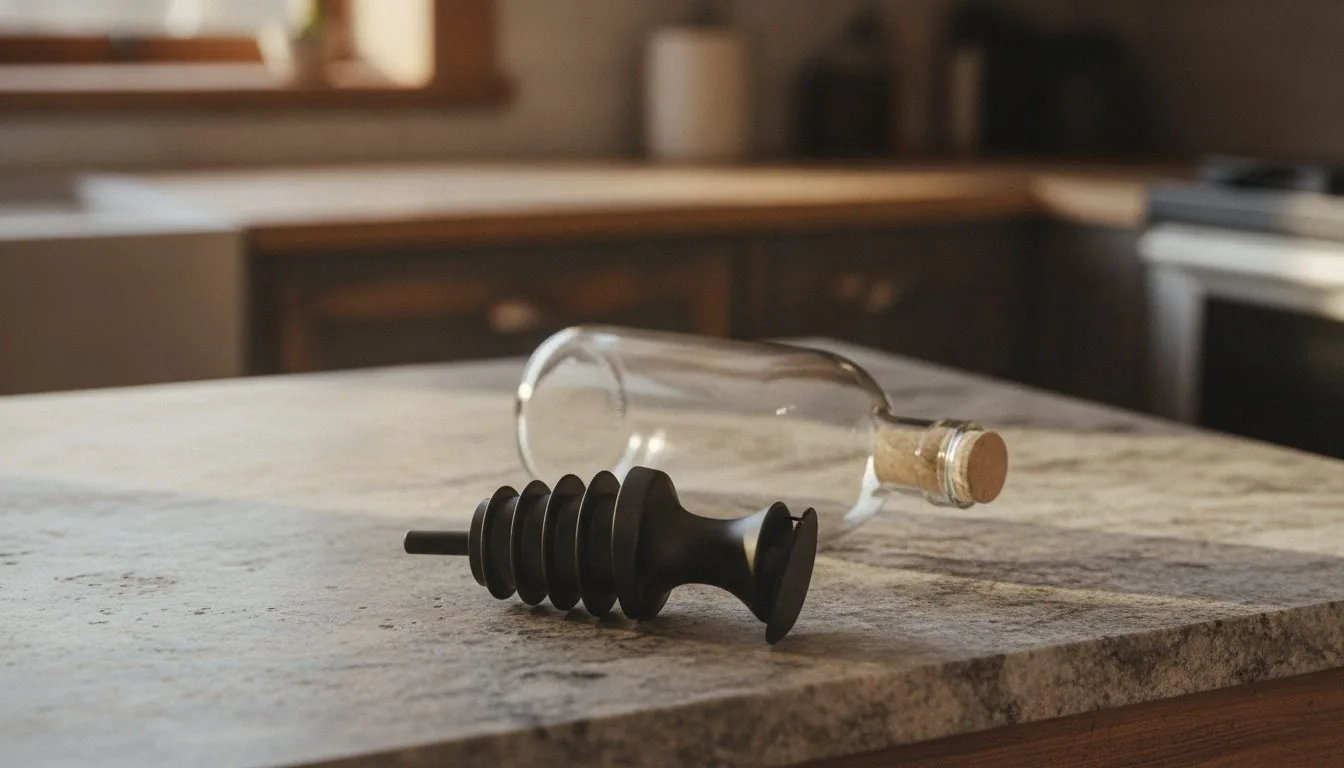
Quick Answer: Close the bottle as soon as you stop pouring. Kendall-Jackson says to put the screw cap or cork back straight away, and to use a proper stopper if the cork is gone. Champagne.fr says sparkling wine needs a stopper cap made for it, and that a spoon in the neck does not work. Esatto sells no stoppers or bottle sealers. Its lidded pourer closes a bar bottle between pours.
Every open bottle has the same problem: the opening stays open. What you close it with depends on what is in the bottle and how often you pour from it. This guide sorts the options, from the original cap to a lidded pourer, and says what each one does and does not do. If you are choosing a pourer first, start with the plastic pour spouts guide. The lidded styles are in the Pour & Seal collection.
What are the ways to seal an open bottle?
Five closures cover most bottles. The third column says where each claim comes from, all checked September 2026.
| Closure | Used for | What the source says |
|---|---|---|
| The original screw cap or cork | Any bottle it still fits | Kendall-Jackson: put it back as soon as you have poured, cork end that was inside first |
| A spare cork or wine stopper | Still wine | Kendall-Jackson: keep spare corks in different widths; a proper stopper gives a tight seal |
| A sparkling wine stopper | Champagne, prosecco and other sparkling wine | Champagne.fr: use a stopper cap made for sparkling wine |
| Plastic wrap and a rubber band | Still wine, when nothing else is to hand | Kendall-Jackson: a last resort |
| A pourer with a built-in lid | A bar bottle poured from often | Esatto product page: the lid seals the bottle between pours |
Does plastic wrap work as a bottle sealer?
Only as a last resort, and only for still wine. Kendall-Jackson's guide to storing open wine says that if you have no cork or stopper you can cover the opening with plastic wrap and snap on a rubber band. If you were searching for a plastic bottle sealer, the plastic options are that wrap and band, or a plastic pourer with a lid. Neither is described as a closure for sparkling wine.
What seals a bottle of champagne or prosecco?
A stopper made for sparkling wine. Champagne.fr says to seal an unfinished bottle with a stopper cap designed for sparkling wine and keep it somewhere cool. It also says the old trick of putting a spoon in the neck does not work. Kendall-Jackson's test of wine preservers adds a safety point: a sparkling cork expands once pulled and cannot be pushed back in, and a regular cork can be forced out by the pressure. Kendall-Jackson's open-wine guide says the same of a regular wine stopper and recommends one with arms that grip the neck. It also says not to use a vacuum pump on sparkling wine.
What does a lid on a pourer do for an open bottle?
It closes the pouring opening between pours. The page for the Esatto Plastic Pourer With Lid says that leaving bottles open exposes the liquor to debris and fruit flies, and that the built-in lid lets you seal the bottle easily. It makes no claim about air or flavor, and no independent source checked for this post says a pourer lid keeps a bottle's contents fresh, so this post makes none. The page describes a pourer with a lid, not a stopper.
The University of Maryland Extension says adult fruit flies are drawn to wine, beer, fruit juice, vinegar and fermenting food, and that the primary control is sanitation. A closed opening gives them less to reach. It does not remove sticky residue on the neck. For how flip-lid pourers and separate dust caps compare, see the flip-lid versus dust cap guide on pourspoutcover.com.
Does sealing a bottle change how long it keeps?
For wine, it helps, but it does not stop the change. Kendall-Jackson says keeping open wine fresh means reducing oxygen exposure and slowing oxidation, that refrigerating helps, and that an open bottle keeps changing even in the fridge. It also says the more wine left in the bottle, the longer it keeps. How long opened spirits keep is a separate subject, covered on pourspoutcover.com.
Where the Esatto Plastic Pourer With Lid, Pack Of 12 Pieces, Black fits
Esatto makes and sells the Plastic Pourer With Lid, Pack Of 12 Pieces, Black. It is our own product, not an independent pick. It suits a bar bottle you pour from often and close between pours. It is the wrong tool for closing a bottle of wine or holding the bubbles in sparkling wine: Esatto does not sell wine stoppers, vacuum stoppers or any bottle sealer. The Esatto Stainless Steel Liquor Pour Spouts with Flip Lids are the stainless steel option with a lid.
Frequently asked questions
What plastic sealer for bottles do I need?
It depends on the bottle. For wine, the original cap or cork, or a stopper. For sparkling wine, a stopper made for it. For a bar bottle, a pourer with a lid. Esatto sells the lidded pourer only, not stoppers.
Can I use plastic to seal a bottle?
Kendall-Jackson lists plastic wrap held with a rubber band as a last resort for still wine when you have no cork or stopper. It gives no time limit. It is not a substitute for a stopper made for sparkling wine.
What is plastic for sealing bottles used for at a bar?
A plastic pourer with a built-in lid closes the pouring opening between pours. Esatto's page for the Plastic Pourer With Lid says the built-in lid lets you seal the bottle easily and that leaving bottles open exposes the liquor to debris and fruit flies.
Should I refrigerate an open bottle after sealing it?
For wine, yes. Kendall-Jackson says to keep opened whites, rosés and even reds in the fridge, because the cooler temperature slows oxidation. For opened spirits, follow the guidance on pourspoutcover.com.
Does a spoon keep champagne fizzy?
No. Champagne.fr says the spoon in the neck idea does not work. It recommends a stopper cap made for sparkling wine, with the bottle kept somewhere cool.
Can I put a regular cork back in sparkling wine?
Kendall-Jackson says no. A sparkling cork expands once pulled and cannot be reinserted, and a regular cork or stopper can be pushed out by the pressure, which can cause injury. Use a stopper made for sparkling wine.
Do sealed bottles still attract fruit flies?
Fruit flies are drawn to wine, beer, juice, vinegar and fermenting food, says the University of Maryland Extension. Closing the opening gives them less to reach, but sanitation is the primary control, so wipe sticky necks and drips.